How Heat Kills
Bed Bugs
Scientifically proven, chemical-free heat treatment.
What Temperature Kills Bed Bugs?
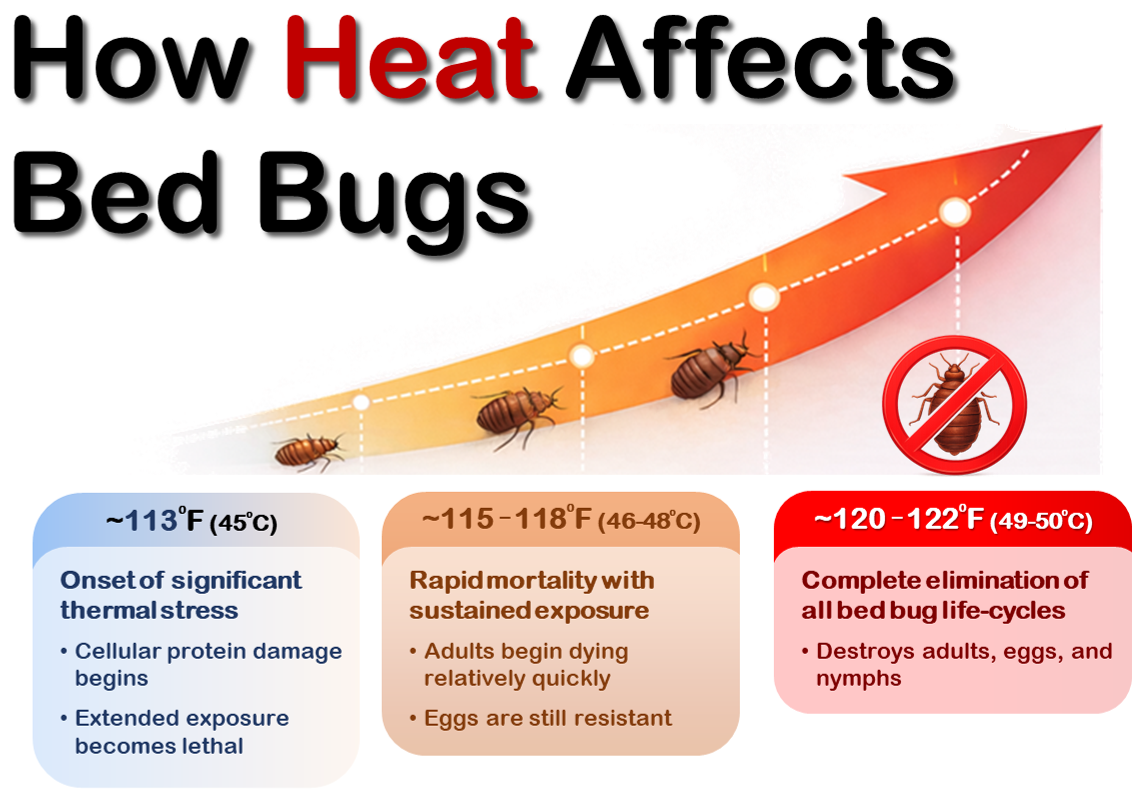
Bed bugs cannot survive sustained exposure to high temperatures, but you may see different temperatures listed online — 113°F, 118°F, 120°F, even 122°F. All of these can be correct because temperature and exposure time work together.
- Lower temperatures require longer exposure
- Higher temperatures reduce the time needed for elimination
Understanding how heat gradually affects the insect’s biology helps explain why temperatures around 120°F are widely used in bed bug heat treatment systems.
Biology 101 - How Heat Kills Bed Bugs
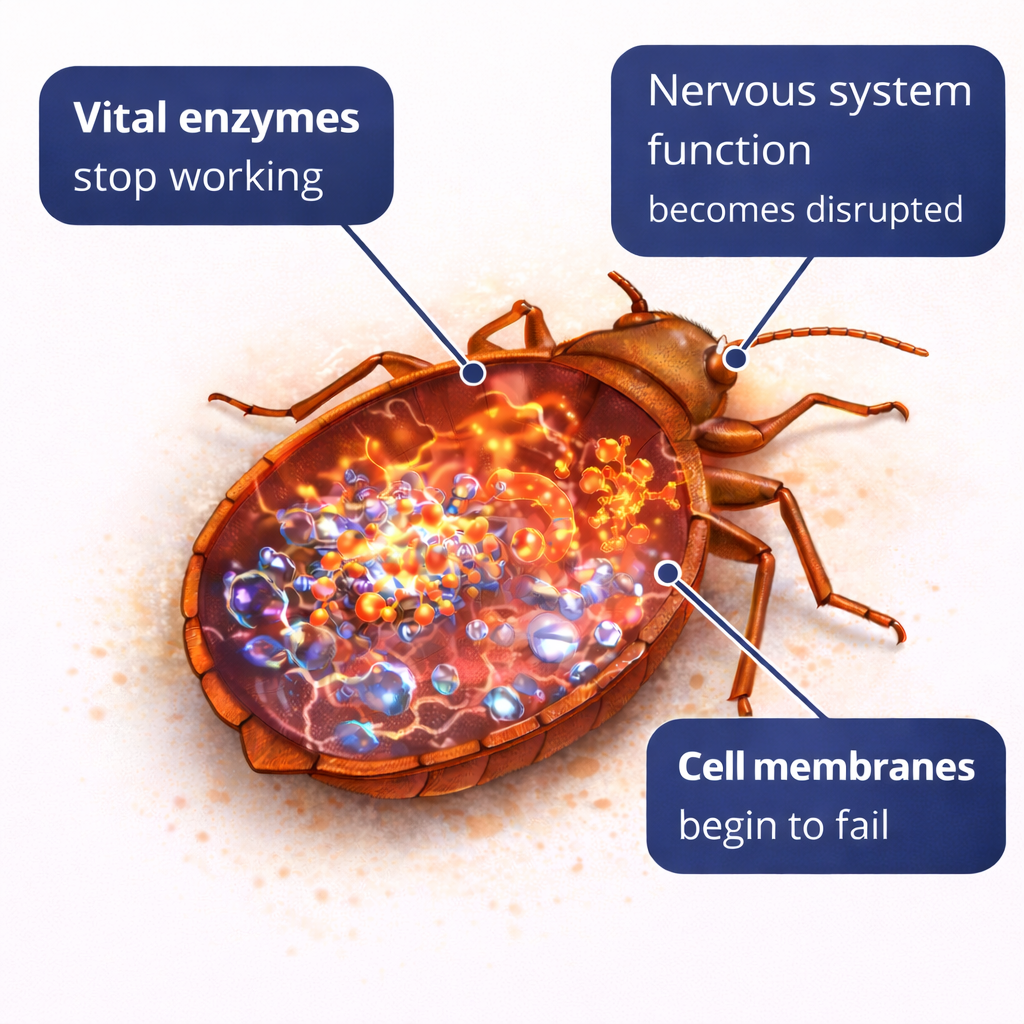
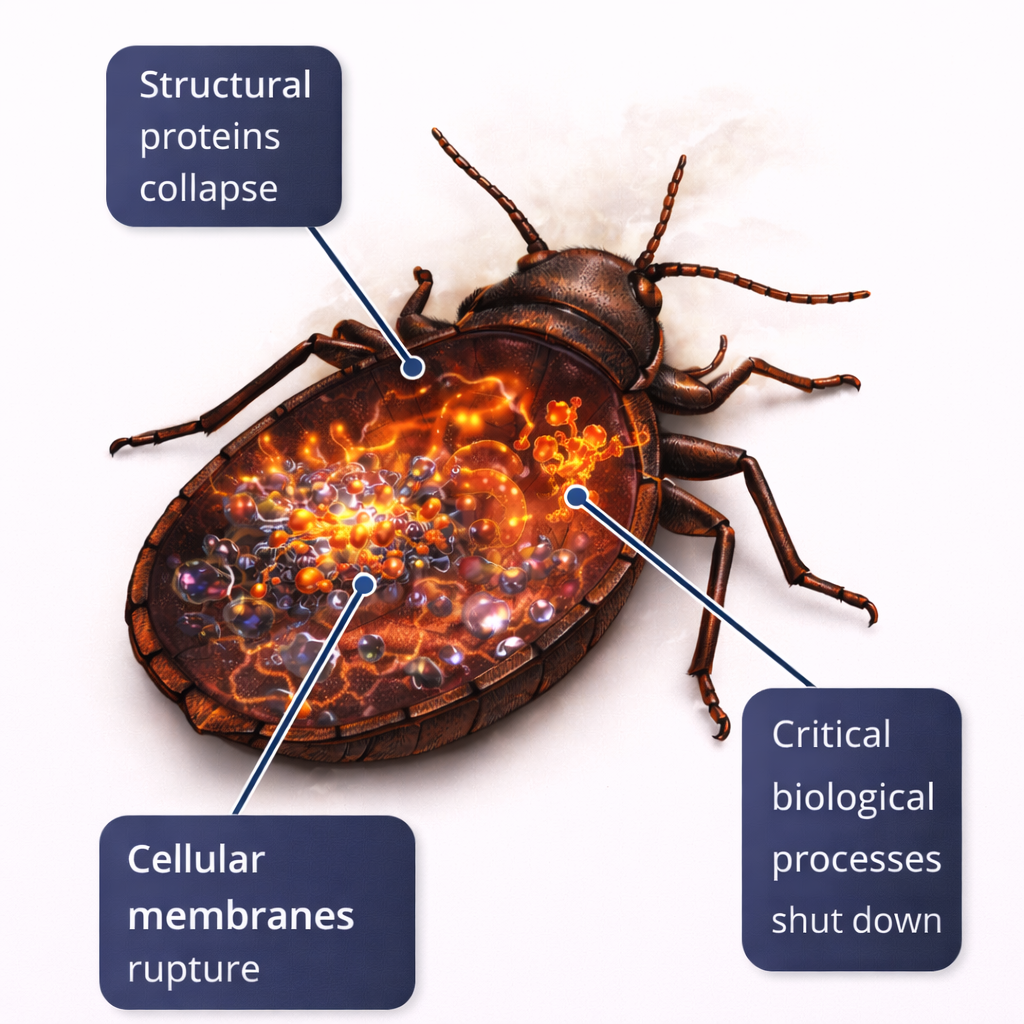
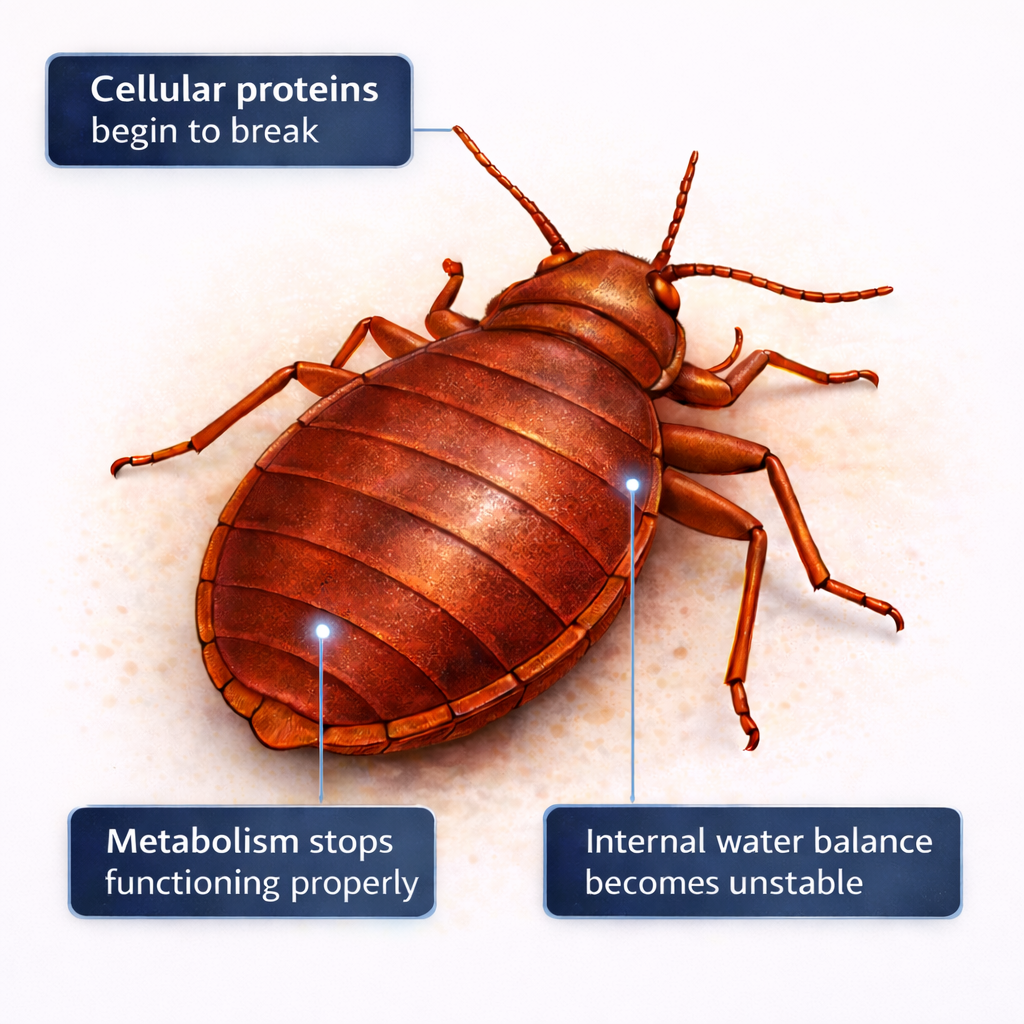
Heat treatment works because bed bugs cannot regulate their internal body temperature. As the surrounding environment warms, the insect’s internal temperature rises as well, eventually disrupting the biological systems required for survival.
Unlike chemical treatments that rely on toxins, heat works by physically overwhelming the insect’s internal structure.
Thermal Stress Begins (~113°F)
Accelerated Mortality (~115–118°F)
Complete Life-Cycle Elimination (~120–122°F)
How Portable Bed Bug Heaters Work
Bed Bug Ovens eliminate bed bugs targeting sustained lethal temperatures
This gradual heating exposes insects to increasing thermal stress over time, which makes temperatures around 120°F highly effective.
Lab Exposure (High Temperature / Short Exposure)
In laboratory experiments, bed bugs are often placed directly onto a heated plate or inside a small container where temperatures rise instantly. Because the insects are exposed to high temperatures for only a short period, researchers often report higher lethal temperatures.
Because the insects are exposed to high temperatures for only a short period, researchers often report higher lethal temperatures. These conditions help researchers identify biological limits, but they do not fully represent how portable heating systems treat infested items.
Portable Heating Systems (Uniform Cumulative Exposure)
Portable bed bug heaters such as ThermalStrike work through gradual heat buildup and extended exposure. Instead of instant heat, temperatures slowly rise throughout the items being treated. This means bed bugs are exposed to increasing thermal stress for a longer period before the target temperature is reached.
As temperatures rise from 113°F (45°C) upward, vital biological systems have already been disrupted and cellular damage accumulates. By the time 120°F is reached at the core, insects have already been exposed to increasing thermal stress for an extended period – improving reliability.
ThermalStrike Recommended Heat Treatment: 120°F for 30 Minutes
The most important measurement during bed bug heat treatment is the core temperature inside the treated items.
When the center of luggage, clothing, or bedding reaches 120°F, bed bugs have already experienced extended exposure to increasing heat.
Maintaining this temperature for an additional 30 minutes ensures reliable elimination.
If Chemical Treatments Haven’t Been Effective, It’s Not Your Fault
Heat treatment offers several advantages over chemical treatments because it works by targeting the fundamental biological limits of the insect, rather than relying on toxic substances to poison it. Bed bugs cannot regulate their internal temperature, so as heat rises their critical biological systems begin to fail — structural proteins break down, metabolic enzymes stop functioning, and the insect’s internal water balance becomes unstable. Unlike chemical sprays, which often only affect insects they directly contact, heat can penetrate fabrics, seams, luggage, and other hidden areas where bed bugs and their eggs commonly hide. Chemical treatments may also require multiple applications due to resistance or missed hiding spots, while properly applied heat exposes the entire treated environment at once. For these reasons, heat treatment is often considered a more thorough, chemical-free approach for eliminating bed bugs across all life stages.